Manufactured Authenticity: Harry Styles Can’t Borrow Radiohead’s Grit
While Thom Yorke used his own acceptance speech to critique streaming monopolies and advocate for the fragile space artists need to take genuine risks, Styles used his massive commercial weight to buy immediate proximity to that exact counter-culture credibility.
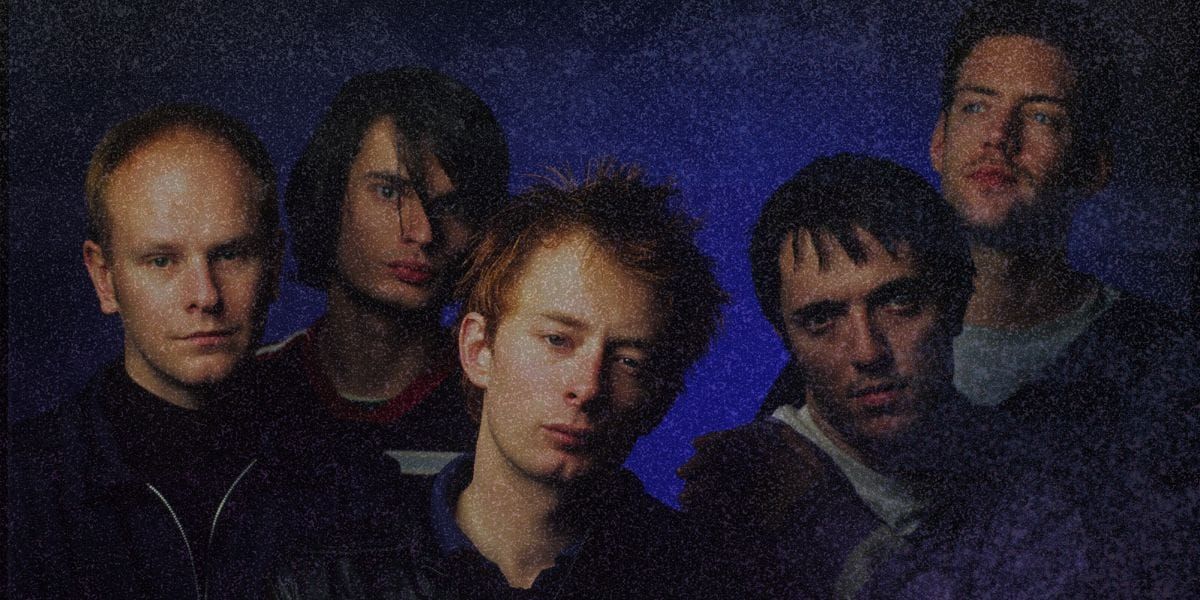
The music industry thrives on a grand illusion: the idea that cultural capital can be absorbed through proximity. When a pop icon operating at the peak of commercial saturation attempts to shift their narrative from "product" to "cultural author" they inevitably look for a blueprint. But when that blueprint belongs to an entity that earned its sovereignty through decades of systemic resistance—like Radiohead—the result is a jarring exercise in narrative warfare (or simple arrogance).
The Proximity Trap: Harry's Rebrand Attempt Continues
When Harry Styles made his unannounced appearance at the Ivor Novello Awards to present Thom Yorke with an award, the media framed it as a moment of spontaneous, artistic mutual respect. In reality, these "unannounced" crashes (also SNL and the Brits - announced on January 28 just days after he hijacked Louis Tomlinson’s album release) are highly calculated maneuvers engineered by elite management structures (such as the Azoff dynasty) to secure viral headlines and shift brand perception.
Harry’s speech delivered that night, introducing a performance by reducing Radiohead's trip-hop masterpiece "Talk Show Host" to a shock-value punchline about his own sex life — exposed a fundamental misunderstanding of the culture he was trying to inhabit.
While Thom Yorke used his own acceptance speech to critique streaming monopolies and advocate for the fragile space artists need to take genuine risks, Styles used his massive commercial weight to buy immediate proximity to that exact counter-culture credibility. The reality: Harry’s career has been an uninterrupted, gilded path managed by the ultimate Hollywood power elite (the Azoff dynasty). He didn't risk anything to stand on that important stage. He used his massive commercial weight to secure a viral moment about—his sex life as a kid.
Tracking Footprints
Have you noticed a pattern? Well, I have. This year specifically, Harry Styles does things AFTER former bandmate Louis Tomlinson does. I’ve been watching this for a while. The timing of this sudden alignment with Radiohead reveals a recurring pattern - repeated narrative trailing.
- April 26: Louis Tomlinson signals a quiet, organic appreciation for Radiohead's dark, monumental masterpiece "Street Spirit (Fade Out)" via an Instagram ‘like’. "Street Spirit" is a song of absolute vulnerability and raw, unglamorous survival—themes that align naturally with Tomlinson's independent, grit-driven ethos.
- May 21: Styles makes "unannounced" appearance at The Ivors, specifically name-dropping "Talk Show Host."
This choice is highly deliberate. When Radiohead released the "Street Spirit" single in January 1996, "Talk Show Host" was the primary B-side packaged on that exact CD. By highlighting the explicit musical sibling of the song Tomlinson had just engaged with, the corporate machinery attempted to crowd into a curated artistic space, simulating an identical depth of musical knowledge for the cameras.
The Repeating History of Costume Branding
This is far from the first time Harry's management deployed this playbook. Industry strategy has always been to drape a highly managed pop product in the aesthetic skin of dead or sovereign rock legends, mistaking costume design for artistic identity.
The Jagger Blueprint - Early in his solo pivot, the narrative machine attempted to brand Styles as the spiritual heir to Mick Jagger, mimicking his early-Seventies tailoring and stage mannerisms. The illusion shattered when Jagger himself flatly rejected the comparison in a 2022 interview with The Sunday Times:
"I mean, I used to wear a lot more eye makeup than him. Come on, I was much more androgynous. And he doesn't have a voice like mine or move on stage like me; he just has a superficial resemblance to my younger self, which is fine — he can't help that."
The Bowie Simulation - When the Jagger narrative met resistance, the machinery pivoted to David Bowie, utilizing gender-fluid fashion and statements on red carpets to imply a radical, avant-garde artistic bravery. But wearing a dress on a magazine cover does not make an artist Bowie. Bowie’s androgyny was an extension of a terrifyingly risky, shape-shifting musical evolution that frequently alienated his commercial base. Bowie had guts and resilience.
Harry’s styling, by contrast, is a safe, focus-grouped aesthetic layer designed to maximize corporate marketability while keeping the underlying music entirely radio-friendly.
David Bowie passed away in January 2016, so he never directly commented on Harry Styles or his later musical evolution. However, Bowie's longtime producer Tony Visconti famously pushed back against comparisons between the two, noting in 2023 that Styles "is not worthy of shining [Bowie's] shoes"
The core failure of these rebranding attempts lies in the irreducible difference between how these respective artists operate within the music industry infrastructure.
The Sovereign Underdog (Radiohead / Authentic Indie) - Dismissed as a grunge-lite fluke ("Creep"), fighting major label pressure (EMI) to survive.
- Risk Threshold - Committing corporate suicide with Kid A by deleting guitars and singles; self-releasing In Rainbows via a "pay-what-you-want" model.
- New Pivot - Continuous, uncompromising alienation of commercial expectations to preserve artistic freedom.
The Corporate Insider (The Harry Styles Model) - Manufactured by a multi-million-dollar industry apparatus; signed to elite power brokers before the One Direction band even dissolved.
- Risk Threshold - Minimizing financial and creative risk by relying on top-tier hitmakers, highly orchestrated PR, and arena-sized glam saturation (Love on Tour).
- New Pivot - A sudden, calculated shift to a "down-to-earth" demeanor on television (such as random SNL audience appearances and repeating grounded lyrical motifs to mimic the independent grit earned by peers like Tomlinson.
The music industry loves to pretend people have short memories, but audiences can feel the atmospheric difference between an artist who is sovereign and an artist who is simulating sovereignty. You cannot spend your entire career playing the ultimate insider game—signing massive corporate deals before your boy band even dissolves, utilizing top-tier PR machines to engineer "spontaneous" public moments—and then successfully convince the world you are a gritty, self-made underdog.
Radiohead's culture is rooted in a fundamental rejection of the very corporate apparatus that Harry Styles sits at the center of. Trying to sew pieces of Radiohead's legacy or Louis's genuine authenticity and lyricism onto a major-label pop brand doesn't make the brand authentic—it just highlights where the seams are.
The most frustrating part isn’t just that he is doing it—it’s the profound lack of artistic imagination required to constantly try on other people’s hard-earned realities like a costume department jacket to see if the public will buy it.
The tide, however, is absolutely beginning to turn. The cracks in that glossy, focus-focused facade are showing, and more people are quietly coming to this same conclusion.
The Fatigue of the "Aesthetic Tourist"
When an artist spends their entire career treating legendary movements, subcultures, and peers as an aesthetic buffet—taking a bit of Jagger's swagger, a bit of Bowie’s gender-fluidity, a bit of Louis’s gritty down-to-earth authenticity and lyricism, and now a dash of Thom Yorke’s existential alienation—it ceases to look like "inspiration" and begins to look predatory.
People are starting to realize that Harry operates as a cultural tourist. He visits these highly respected spaces, takes a selfie (or crashes a stage) to prove he was there, and then retreats back to the safety of his multi-million-dollar corporate compound. The public is growing weary of pop stars who want the prestige of being a counter-culture renegade without ever taking the financial, legal, or industry risks required to earn it.
While the mainstream media tried to frame his "Talk Show Host" virginity comment at the Ivors as a charming, cheeky bit of classic Harry humor, the reaction in serious musical circles was heavily mixed.
The Ivor Novello Awards are arguably the UK’s most prestigious, fiercely respected celebration of the actual craft of songwriting. When Thom Yorke took the stage, he delivered a blistering, serious, deeply political speech taking direct aim at major labels and streaming executives for their "nasty, fucking opaque accounting tricks" that are actively drying up the well for the next generation of independent artists.
The structural contrast was almost pathetic:
Harry, The Corporate Product: Stood at the microphone at an elite songwriting event and reduced a brilliant piece of 90s alt-rock history to a cheap, predictable joke about his own anatomy to ensure a viral headline.
Thom, The Sovereign Artist: Stood at the exact same microphone to fight for the economic survival of young, broke musicians.
The reason people are slowly waking up to this pattern comes down to basic narrative sustainability. A manufactured brand can only copy-paste so many blueprints before the public notices the lack of a central, authentic core.
People are coming to this conclusion slowly because the PR machine is incredibly powerful and expensive. It is designed to drown out critical thinking with shiny, high-production distractions. But narrative theft has an expiration date.
When an artist spent a massive stadium tour positioning themselves as an untouchable, glamorous pop deity, a sudden pivot to "humble, down-to-earth alt-rock connoisseur" doesn't look like growth—it looks desperate. The square peg is being forced into the round hole so violently that the edges are completely splintering, and the public is finally starting to see the dust.
This post coming to Substack and You Tube